CPSC new regulations have been relaxed, but GCC flammability testing remains a mandatory hurdle for cross-border sellers!
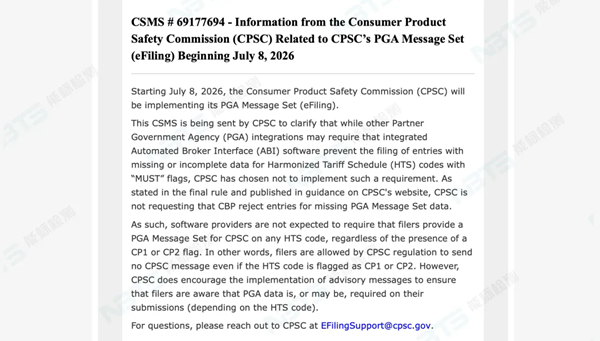
Currently, U.S. Customs and the CPSC have jointly clarified that the absence of CPSC electronic filing will not directly trigger system interception—goods may be released first and then reported later. However, this leniency does not mean exemption from liability; CPC/GCC certificates are still required. The CPSC also stated in its final rule that missing required eFiled certificate data, or submitting false or misleading certificates, will still affect product risk scoring and increase the likelihood of inspection. Additionally, the CPSC reserves the right to take enforcement actions against non-compliant products. In short: goods won't be automatically detained for a single missed filing, but compliance responsibilities remain unchanged.
For products such as textiles, apparel, carpets, mattresses, and upholstered furniture, flammability testing remains an unavoidable requirement for GCC compliance.
I.What is GCC?
GCC stands for General Certificate of Conformity, a compliance declaration issued by importers, manufacturers, or private labelers to demonstrate that a product meets the regulations enforced by the CPSC.
However, GCC cannot be issued out of thin air. It must be supported by test reports, a reasonable testing plan, or regulatory-approved exemption documentation.
After entering the eFiling stage, GCC data typically needs to be aligned with product identification information, applicable regulatory provisions, issuing authority of the certificate, custodian of test records, production date and location, testing date and location, testing laboratory information, and a declaration of certificate authenticity. If regulatory exemptions apply, clear supporting evidence must also be provided.
Additionally, please note: if the product is a children's product—such as children's sleepwear, infant mattresses, or soft products designed specifically for children—it often requires a CPC (Children's Product Certificate) rather than GCC. Sellers should first determine the product's classification before deciding whether GCC or CPC applies.
II. Common GCC Combustion Testing Regulations
01:16 CFR Part 1610
Applicable products include finished garments and textile fabrics used in their production, such as T-shirts, pants, shirts, bathrobes, and certain apparel fabrics.
Note: 1610 is a 45-degree flammability test, not a vertical flame test. The test evaluates flammability performance by observing burn time, surface flash ignition, and base fabric combustion, depending on whether the fabric is a plain weave or a pile fabric, and classifies the results into three levels:
Class 1 (Normal Burning): Flame spread on flat fabric is greater than or equal to 3.5 seconds; permitted for normal sale
Class 2 (Moderate Burning): Applicable only to pile fabrics, with flame spread of 4–7 seconds; backing material chars without flame propagation
Class 3 (Rapid and Intense Burning): Prohibited from import and sale
Common exemptions include: flat fabrics with a weight of not less than 2.6 oz/yd²; or fabrics made entirely of acrylic, modacrylic, nylon, olefin, polyester, wool, or combinations thereof.
However, exemption does not mean no judgment is required. Companies should still retain documentation regarding composition, weight, fabric structure, and other relevant details. The following products are not subject to the flammability requirements of 16 CFR 1610, but it is still recommended to confirm based on product use and construction:
Hats that do not cover the neck, face, or shoulders;
Gloves with a length of 14 inches or less, not sewn to clothing;
Shoes made entirely or partially of non-sock material, separate and unconnected;
Lining fabric used solely as an inner layer.
02:16 CFR Part 1630 /1631
16 CFR Part 1630 applies to large carpets and rugs, typically defined as products with any side exceeding 1.83 meters or an area greater than 2.23 square meters.
16 CFR Part 1631 applies to small carpets and small rugs, such as doormats, bathroom mats, and small decorative throws.
It should be noted that the core method for 1630/1631 is typically the surface combustion test of the fabric, used to determine whether the charring area after burning exceeds the limits permitted by regulations. If a small carpet does not meet the requirements of 1631, warning label requirements may also apply under certain circumstances, and it cannot simply be treated as an ordinary textile.
03:16 CFR Part 1632
16 CFR Part 1632 applies to various types of mattresses and mattress pads, including adult mattresses, children's mattresses, infant mattresses, bunk bed mattresses, Japanese-style mattresses, and certain mattress protectors.
The regulation primarily focuses on the risk of smolder ignition, with a typical test being the cigarette ignition source test. In simple terms, it evaluates whether a mattress will continue to smolder and spread fire when exposed to conditions similar to an unextinguished cigarette.
For mattress products, material composition is crucial. Factors such as fabric, quilting layer, filling, flame retardant layer, adhesives, and variations in mattress thickness can all affect test results.
04:16 CFR Part 1633
16 CFR Part 1633 primarily applies to mattress sets and also includes some mattresses sold separately. It focuses on the overall flame resistance performance of mattresses when exposed to open flame.
The focus of testing is not whether a single layer of material is flame-retardant, but rather the overall open-flame combustion performance of the entire mattress system. Therefore, mattress fabric, filling layers, flame-retardant barriers, and structural design must all be considered together. It's not sufficient to rely solely on a fabric flammability test report to determine that the entire mattress complies with regulations.
05:16 CFR Part 1640
Soft furniture includes sofas, upholstered chairs, office armchairs, and other padded furniture used indoors.
16 CFR Part 1640 addresses the flammability of upholstered furniture and is commonly associated in practice with cigarette ignition source testing. The key to compliance assessment for upholstered furniture lies in whether the material combination is prone to ignition or sustained smoldering.
Products not falling within the scope of upholstered furniture, such as standard bed frames, mattress bases, bedding, and sports padding furniture, should be evaluated separately for applicable regulations.

III. Platform Compliance Support Offered by NBTS Testing
With the official implementation of CPSC eFiling and increasingly stringent platform audits, sellers need to prepare not just "a single test report," but a comprehensive compliance documentation chain capable of meeting requirements for customs clearance, platform reviews, customer spot checks, and regulatory traceability.
NBTS is a testing laboratory recommended by platforms such as Amazon, SHEIN, TEMU, Alibaba.com, and AliExpress, offering cross-border sellers one-stop compliance support ranging from risk assessment and sample testing to document review.
NBTS service coverage includes the following:
Product Risk Assessment
Evaluate whether a product falls under CPSC jurisdiction and requires flammability testing, based on its intended use, materials, structure, sales platform, and target market.
Applicable Regulation Determination
Assist in confirming whether products comply with regulations such as 16 CFR 1610, 1630, 1631, 1632, 1633, and 1640, and distinguish between GCC, CPC requirements, or exemption scenarios.
Sample Testing Services
Conduct appropriate flammability performance testing for products including apparel textiles, carpets/rugs, mattresses, mattress sets, and upholstered furniture.
Test Report and Exemption Documentation Preparation
For products meeting exemption criteria, assist in compiling supporting documents such as material composition, weight, structure, and material descriptions. For products requiring testing, ensure report details match SKU, batch, and model information.
GCC/CPC Document Review
Review certificates to verify product identification, regulatory references, manufacturing details, test data, and responsible party information, ensuring consistency between certificates, test reports, and actual product information.
eFiling Data Preparation Support
Assist sellers in organizing key certificate fields required by the CPSC PGA Message Set in advance, reducing risks of resubmission, inspection failures, and document rejections.
Platform Compliance Documentation Package Preparation
Support preparation of compliance documents such as test reports, certificates, product images, labels, and user manuals for audit requirements on platforms including Amazon, SHEIN, TEMU, Alibaba.com, and AliExpress.
Pre-Shipment Compliance Review
Conduct compliance reviews prior to mass production, material changes, supplier changes, process modifications, or packaging updates to determine if retesting or certificate renewal is required.
The U.S. CPSC flammability regulations for textiles are being enforced more strictly each year, making GC certification no longer optional but a mandatory requirement for general product exports. What certification and customs clearance challenges have you encountered when exporting your products to the U.S.? Feel free to leave comments below to discuss fabric exemptions, testing procedures, and practical issues regarding GCC certification.

 Hello, welcome to visit the official website of Nengbiao Testing!
 Website map
 Contact
 ENGLISH


